

REFLECTIVE ROOF SYSTEMS OFFER OBVIOUS ENERGY SAVINGS?

One thing almost everyone in the roofing industry can agree on is that the cool roof calculators now in use are in need of reprogramming. The models generated by these calculators are limited; the results of their calculations can change significantly by forcing the user to apply certain inputs and exclude others. The calculators are often difficult to use and completely ignore the emergent issue of electricity demand charges. In fact, the latest iteration of the Roof Savings Calculator is “currently undergoing revision and should not be used,” according to Ronned Levinson, Ph. D., staff scientist at Lawrence Berkeley National Laboratory.
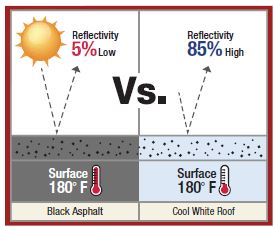
As a result, there is currently no proven way to accurately calculate a comparison between the varying systems. Obviously, increasing R-value, as current codes now require(R-25 or R-30 from the previous R-10 standard), will improve energy savings, but increases the overall cost of the roof, which takes too many years to realize these savings. However, this will perpetuate the debate between the black and white membranes, especially in the Chicago marketplace, as the white membrane provides the best savings in the warmest temperatures, but reverts to the opposite effect in the colder temperatures.
So, while state and local codes will be the driver as to what the building owner/manager has as roof options, there will continue to be no “black and white” answer as to what the best roof is when it comes to maximum energy savings. My advice is to take care of whatever it is you have for as long as you can, to avoid having to go through the process.